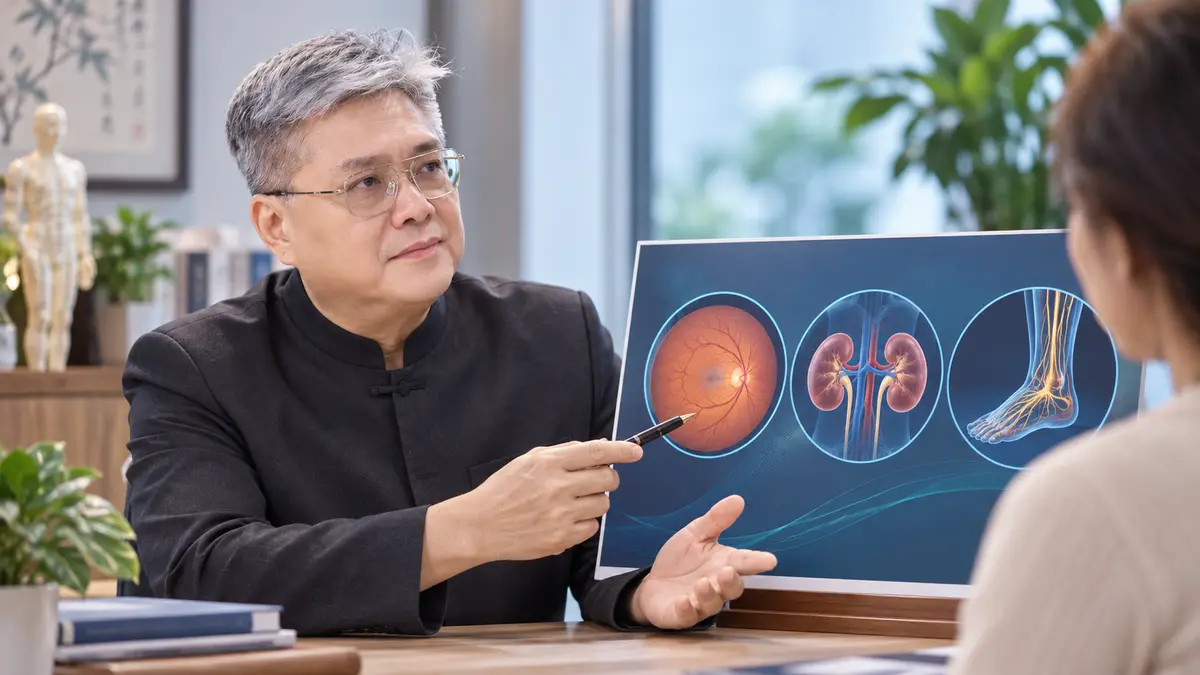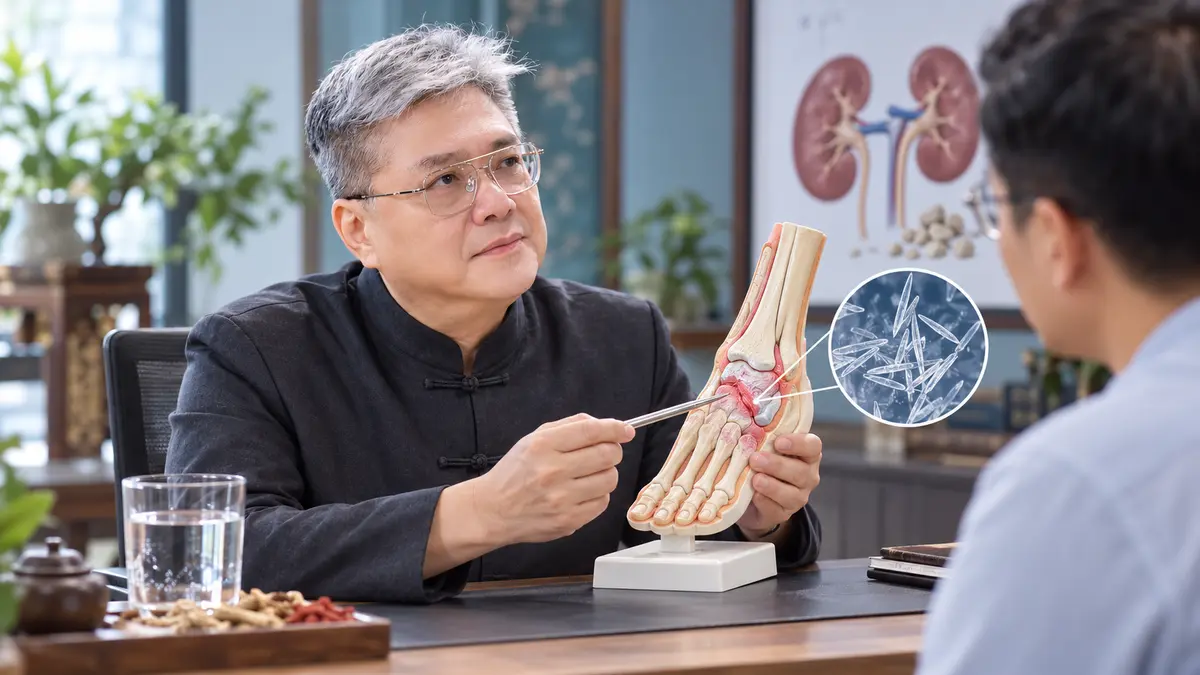
Uric acid is produced during purine metabolism and is removed mainly through the kidneys. A raised blood level may cause no immediate pain, and not everyone with hyperuricaemia develops gout. However, urate crystals can accumulate in joints and the kidneys, leading in some people to acute gout, tophi or kidney stones.
The need for medicine depends on the uric-acid level, gout attacks, tophi, stones, kidney function and other health factors. Adequate hydration, less excess alcohol and sugary drinks, weight management and review of relevant medicines may help, but one high result is not a reason to self-prescribe treatment. People already taking urate-lowering medicine should not stop it simply because pain is absent or an attack occurs.
TCM may support joint comfort and general wellbeing, but an acutely red, hot and swollen joint can also be infected and should not automatically be called gout. Severe joint pain with fever, flank pain with blood in the urine or reduced urine output requires prompt assessment.
During an acute gout attack, uric acid may not always be markedly raised, so one result cannot exclude gout. Conversely, someone with an elevated level but no attacks may not need the same treatment as a person with gout. History, examination and long-term risk should guide the plan.