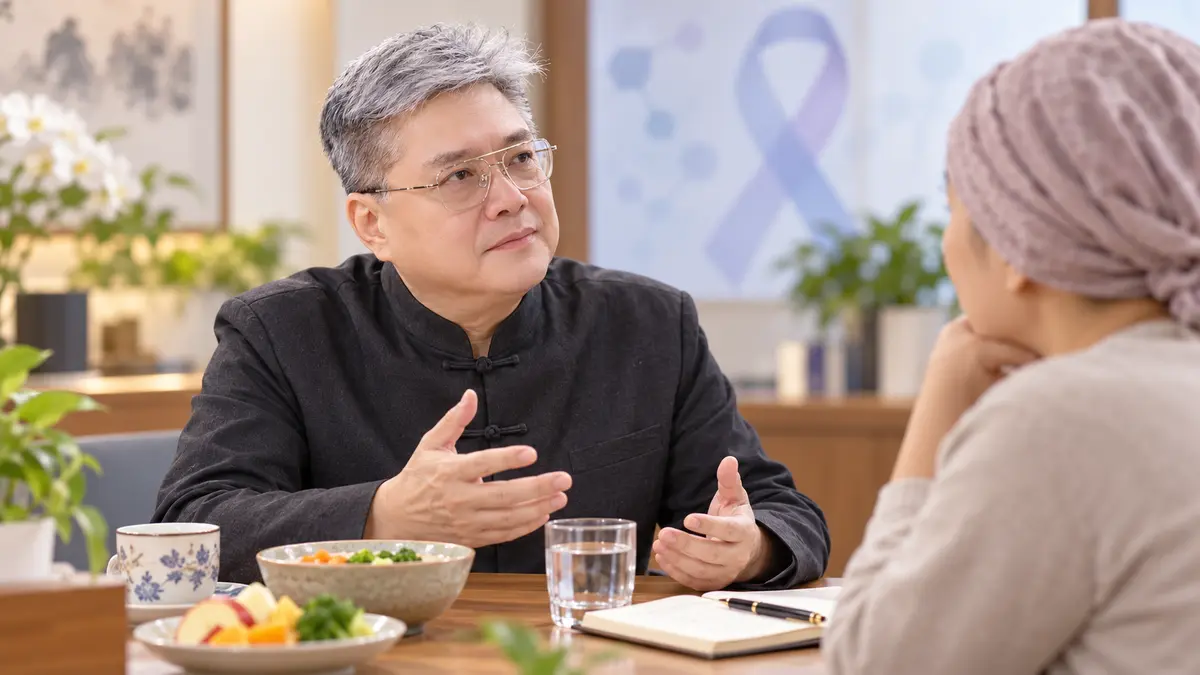
Cancer-related fatigue is more than ordinary tiredness and may not fully improve with rest. Poor appetite can result from nausea, mouth pain, taste changes, constipation, anxiety, the cancer itself or treatment side effects. Ongoing low intake and weight loss can reduce strength and treatment tolerance, so simply telling a patient to “eat more” is rarely enough.
Tracking weight, food intake, nausea, pain, bowel function and fatigue can help the oncology team. Assessment may identify anaemia, infection, dehydration, electrolyte or thyroid problems, medicine effects or low mood. A dietitian can suggest smaller frequent meals, energy- and protein-dense foods and ways to manage swallowing or mouth problems.
With the oncology team informed, TCM may provide supportive care for nausea, appetite, sleep and fatigue. Herbs and supplements can interact with anticancer medicines. Fever, inability to keep fluids down, repeated vomiting, confusion, sudden breathlessness or rapidly worsening weakness requires urgent contact with the treating team.
Energy planning also matters. Breaking essential tasks into smaller periods, doing demanding activities when energy is best, and maintaining gentle activity when approved may preserve function better than staying in bed all day. A sudden increase in fatigue should prompt assessment for infection, anaemia or another treatable cause.