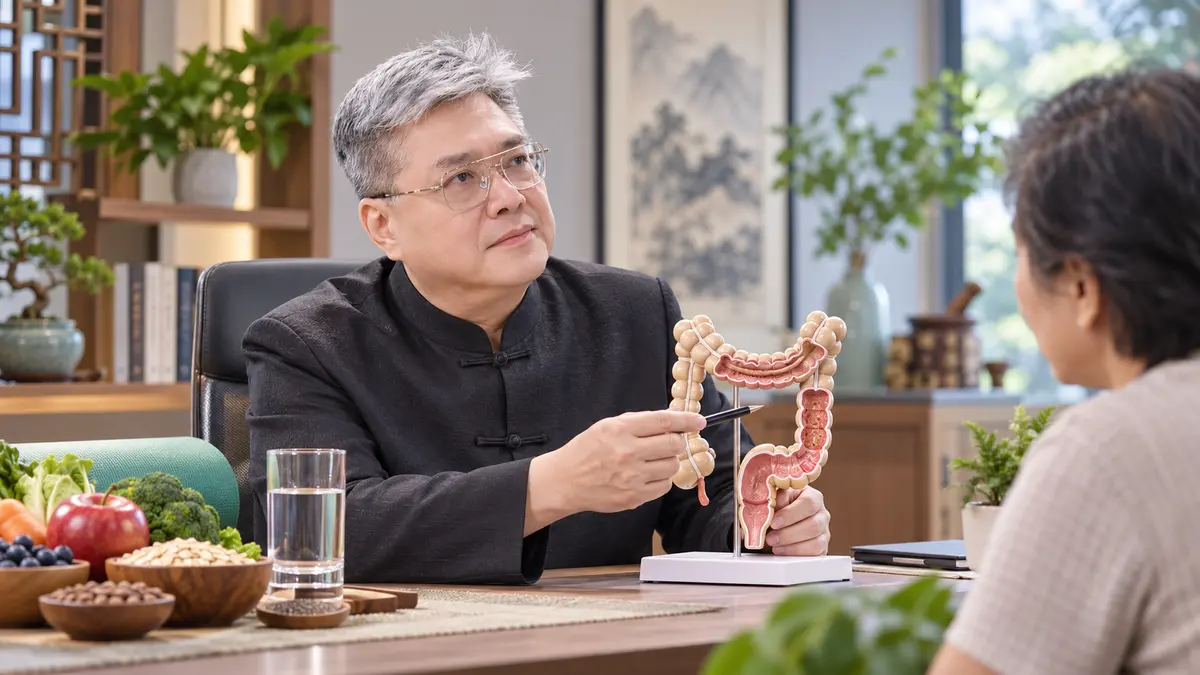
Constipation is not only going several days without a bowel movement. It can also mean hard stools, straining, a sense of blockage or incomplete emptying. Low fluid or fibre intake, inactivity, ignoring the urge, changes in routine and many medicines may contribute; thyroid disease, diabetes, neurological conditions and pelvic-floor dysfunction are other possibilities.
Fibre should be increased gradually with adequate fluid, otherwise bloating may worsen. Regular activity, a consistent toilet routine and appropriate laxative use help some people, whereas long-term dependence on stimulant products or “detox” methods is not ideal. Persistent symptoms should be assessed in the context of age, medicines and warning signs.
TCM may support bloating, appetite, stool pattern and general wellbeing, but should not delay investigation of structural or medicine-related causes. Blood or black stools, persistent abdominal pain, vomiting, marked distension, weight loss, anaemia or a sudden change in bowel habit requires prompt medical care.
Recording bowel frequency, stool form, straining, pain and medicines can help distinguish lifestyle-related constipation from problems needing further assessment. Older people, those recovering from surgery and people taking several medicines should increase fibre cautiously and gradually rather than making a sudden large change.